From Corinth To Thessalonica: Holiness, Hope, And Everyday Faith

Paul’s words invite us to a faith that transforms daily routines into sacred acts. He urges believers to honor God through self-control, loving others, and working with integrity, showing that holiness grows in ordinary moments. From Corinth to Thessalonica, his teaching connects the struggles of a world full of desire to the hope found in Christ’s resurrection and promised return. Even as grief and questions arise, hope remains steadfast. This journey calls us to blend courage, quiet perseverance, and expectation, letting faith shape every aspect of life and reminding us that God’s promises touch both now and eternity.


The room is small, the lamp is steady, and the words are weighty: this is the will of God, your sanctification. We invite you into Corinth’s midnight hush to watch Paul shape a letter that still shapes us, moving from Corinth to Thessalonica, from tender encouragement to clear instruction and then to a horizon bright with hope. Across these pages of 1 Thessalonians 4, we trace a pattern that refuses to split daily life from eternal promise.
We sit with the hard call to abstain from sexual immorality in a world that worshiped desire, and we hear why self-control is not shame but honor. Paul names how misuse of our bodies wounds our neighbors and grieves the God who gives His Holy Spirit. Then he grounds holiness in simple habits: love that expands more and more, a quiet life that minds its own affairs, and work done with steady hands. Integrity becomes witness. Ordinary tasks become sacred.
When grief enters the room, hope does not step out. The resurrection of Jesus reframes loss, and Paul’s rooftop vision of the Lord’s return—trumpet, archangel, and reunion—meets our sorrow with courage. The dead in Christ will rise first. The living will join them. Together, we will be with the Lord forever. That future is not a puzzle to debate; it is comfort to share and fuel for faithful living now. By the end, holiness, love, work, and waiting weave into one life: quiet, brave, and expectant.
If this reflection steadied your heart, share it with someone who needs encouragement today. Subscribe for more Scripture-led moments, leave a review to help others find the show, and tell us: what will you practice “more and more” this week?
Music Credit: "Hands of Faith" by Wildflowers
04:08 - A Lamplit Room With Paul
07:35 - Seeds In Thessalonica Under Pressure
13:51 - From Encouragement To Clear Instruction
18:01 - God’s Will: Your Sanctification
24:21 - Holiness, Honor, And Self-Control
28:43 - Wronging A Brother And God’s Judgment
32:02 - Not Man But God: Spirit-Empowered Holiness
37:22 - Love And Quiet Work More And More
43:48 - Reading 1 Thessalonians Chapter 4 Aloud
In the Field Audio Bible: 03:36
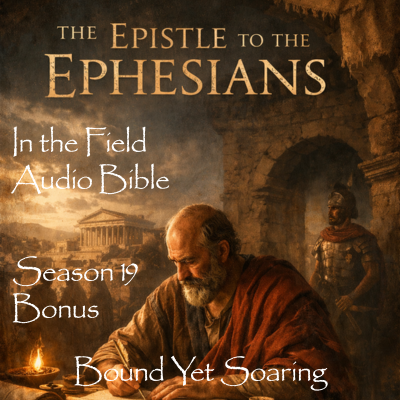
The oil lamp flickers against the plastered wall of the rented workshop, casting dancing shadows across the rough wooden table where parchment lies waiting. You can smell it. The sharp earthy scent of fresh ink mingling with the ever-present aroma of leather and wool. Outside, the sounds of Corinth's evening marketplace fade into the distance. Merchants calling final prices, cartwheels grinding against stone streets, the distant laughter from the taverns near the port. You sit across from Paul, watching his weathered hands smooth the parchment one more time. His fingers are stained, not just with ink, but with the dye from the tinted fabric. The evidence of his trade. These are working hands, calloused and strong, yet capable of the most tender gestures when he prays or when he speaks of his beloved churches.
In the Field Audio Bible: 06:04
Do you feel it? Paul asks suddenly, his dark eyes lifting to meet yours. The weight of what we are about to write? You nod, uncertain of your words. He leans forward, his voice dropping to that intimate tone you have come to recognize. The voice of a father speaking to a beloved child. In Thessalonica, we planted seeds in rocky soil. We had mere weeks, perhaps three Sabbaths, in the synagogue before the opposition became too fierce. But oh, what seeds they were. His face softens with memory, and you see the mixture of joy and pain there. They received the word in much affliction, yet joy was inspired by the Holy Spirit. Do you understand what that means? They suffered for believing, you offer. More than that, Paul says, rising from his seat and moving to the small window that overlooks the narrow street. The last rays of sunlight catch the silver in his beard. They became imitators of us and of the Lord himself. While the Jewish leader stirred up the crowds, while Jason and the brothers faced the city authorities, while we had to flee under cover of darkness. He pauses, his hand gripping the window frame. Even then, they held fast.
In the Field Audio Bible: 07:49
You remember the stories? How Paul, Silas, and Timothy had been forced to leave Thessalonica so abruptly. How Paul's heart had ached with worry for these new believers left vulnerable in the hostile city. That's why Timothy's return brought such relief, you say quietly. Paul turns, and his smile transforms his entire countenance. Yes. When Timothy came back to us here in Corinth with news of their faith and love, when he told us they still hold us in affectionate memory and long to see us, he presses his hand to his chest. I could breathe again. We were comforted in all our distress and affliction. Paul returns to the table, settling onto the low stool with the ease of one accustomed to simple accommodations. But now, he says, dipping the reed pen into the ink pot, now we must go further. Timothy brought good news, yes. But he also brought questions. Concerns. These beloved brothers and sisters are navigating waters we did not have time to fully chart with them. What kind of questions? You ask, leaning closer. Paul sets down the pen and folds his hands, his expression becoming serious. Questions about how to live, about holiness, about what it means to be set apart for God in a city like Thessalonica, a city not unlike this one. He gestures toward the window, toward Corinth beyond. You have walked these streets, you have seen the temples, the prostitutes at the shrine of Aphrodite, the casual immorality that pervades every marketplace, every public bath, every business transaction. This is the Roman world, and it celebrates what God calls us to flee from.
In the Field Audio Bible: 10:01
You think of what you have witnessed in Corinth? The way sexual immorality is woven into the very fabric of religious and social life. In Thessalonica, Paul continues, they faced the same challenges. Most of them came out of paganism. The worship of idols wasn't just the religion; it was their entire social structure, their business networks, their family traditions. And now? Now they followed the one true God, the living God. But the old world presses in on every side, whispering that the old ways weren't so bad, that everyone else lives this way, that surely God doesn't care about such small matters. But he does care, you say. He does indeed. Paul's voice carries absolute conviction. This is why we must write. This is why every word matters. He picks up the parchment, the ink now dry, and reads aloud his own words. May the Lord make you increase and abound in love for one another and for all as we do for you, so that ye may establish your hearts blameless in holiness before our God and Father at the coming of our Lord Jesus with all his saints.
In the Field Audio Bible: 11:30
He sets it down and looks at you intently. Do you see how this ends? With holiness, with the coming of the Lord. These aren't separate thoughts; they are connected. How we live now matters because of who is coming and what he will find when he arrives. You feel the weight of this truth settling in your chest. So now, Paul says, taking up the pen again, we move from encouragement to instruction, from you are doing well to do this even more. They need to know with clarity, with apostolic authority, how God calls them to live.
In the Field Audio Bible: 12:21
Finally, then, brothers, Paul speaks as he begins to write, his voice measured and deliberate. We ask and urge you in the Lord Jesus that, as you received from us how you ought to walk and to please God, just as you are doing, that you do so more and more. He pauses, and you watch the ink dry on the parchment. Walk, he says thoughtfully. The way of life, the path one follows. It's not about a single decision or a moment of belief. It's about every step, every day, every choice. And they are already walking this path, you ask. They are, Paul affirms, and pride fills his voice. But the Christian life is not static. We don't arrive and then stop moving. We press on. We grow. We do so more and more. He looks up at you. Have you noticed that phrase? More and more? It appears throughout this letter. Their faith is growing more and more. Their love is increasing more and more. And now, their holy living must continue more and more. You nod, beginning to understand the pastoral heart behind these words. The instructions we gave them, Paul continues, came through the Lord Jesus. This isn't Paul's opinion or cultural preference. When I tell them how to live, I speak with the authority of Christ Himself. Paul dips the pen again. For you know what instructions we gave you through the Lord Jesus.
In the Field Audio Bible: 14:33
The room falls quiet, except for the scratch of reed on parchment. You watch Paul form each letter with care, his lips moving slightly as he writes. When he finishes the sentence, he sets down the pen and flexes his fingers. Now comes the heart of it, he says softly. For this is the will of God, your sanctification. Sanctification. You repeat, testing the word. Paul explains, to be made holy, set apart, consecrated for God's purposes. It's both a position and a process. The moment they believed, they were sanctified, set apart as God's own possession. But now they must live out that reality. They must become in practice what they already are in position. He stands and begins to pace, his teacher's instinct taking over. In Thessalonica, in Corinth, in every city of the empire, sexual immorality is as common as breathing. The Greeks and Romans see nothing wrong with it. A man visits a prostitute at the temple? That's worship. A married man keeps a mistress? That's expected. Young men are initiated into sexuality through practices that would make you blush to speak of them. You have seen enough to know. Paul is not exaggerating. But God's will, he says, stopping to face you, is completely different, utterly opposed to the culture around us. Listen to what we must write next. That you must abstain from sexual immorality, that each one of you know how to control his own body in holiness and honor, not in the passion of lust like the Gentiles who do not know God.
In the Field Audio Bible: 16:44
Paul returns to the table and writes these words carefully, deliberately. You can sense the pastoral urgency in every stroke of the pen. Abstain, Paul emphasizes, not be moderate, not be discreet, abstain completely. Sexual intimacy is a gift from God, but it has a proper place within the covenant of marriage between a man and a woman. Everywhere else, it's sexual immorality, and it defiles what God created to be holy. But the culture says, you begin. I know what the culture says, Paul interrupts gently. The culture says our bodies are ours to use as we please. The culture says sexual desire is natural and should be satisfied however we choose. The culture says there's no harm in it. He leans forward. But the culture does not know God. The Gentiles who live in passion and lust, they don't know the one who created human sexuality, who designed it for a purpose, who calls it good within his boundaries. You think of the believers in Thessalonica, surrounded by this culture, bombarded daily with these messages. This is why we must be clear, Paul says. Each person must know how to control his own body. Either way, the meaning is the same. You are responsible for yourself. You cannot blame your passions, your desires, your circumstances. You must exercise self-control, which is itself a fruit of the Spirit. In holiness and honor, you add, reading over his shoulder. Yes, Paul says warmly, not in shame or secrecy, but in holiness, set apart for God's purposes and honor, treating our bodies and the bodies of others with the dignity they deserve as image bearers of God. This is so different from the world's way, where bodies are used, exploited, discarded.
In the Field Audio Bible: 19:08
Paul continues writing, and you watch the next words take shape. That no one transgress and wrong his brother in this matter, because the Lord is an avenger in all these things, as we told you beforehand and solemnly warned you. Wrong his brother? You question. Paul looks up, and his expression is grave in every way imaginable. When a man commits adultery, he wrongs his brother by violating his marriage. When someone engages in sexual immorality, they potentially wrong their future spouse or their brother's future spouse. When we participate in the sexual corruption of the culture, we wrong the entire community of faith by bringing defilement into what should be holy. He pauses. And make no mistake, God sees it all, and he will judge. The lamplight flickers, and you feel a chill despite the warm evening air. This isn't a minor issue, Paul continues, his voice taking on the weight of prophetic warning. This is a matter of eternal consequence. He writes in silence for a moment, then reads aloud. For God has not called us for impurity but in holiness. Therefore, whoever disregards this disregards not man but God, who gives his Holy Spirit to you. Not man, but God, you whisper. Exactly, Paul affirms. When we teach these things, we are not imposing human rules or cultural preferences. This is God's call, God's standard, God's will. To reject this teaching is to reject God Himself. He sets down the pen and looks at you with deep earnestness. And here's the beautiful truth. He doesn't call us to holiness and then leave us to achieve it on our own. He gives us His Holy Spirit.
In the Field Audio Bible: 21:45
You sit back, absorbing the weight of these words. Outside, night has fully fallen, and the sounds of Corinth have changed. Rougher now, louder. The sounds of a port city's darker hours. Do you understand why this matters so much? Paul asked quietly. These believers in Thessalonica, they are not just trying to be good people. They are representing the living God in a dark world. They are showing their neighbors, their families, their former friends from the pagan temples that there is another way to live, a better way, a holy way. And if they fail, you ask. When they fail, Paul corrects gently. Because we all stumble in many ways, then they repent, they receive forgiveness, and they press on. More and more. Always more and more. The Christian life is not about perfection; it's about direction. Are we moving toward holiness or away from it? Are we growing in sanctification or settling for the world's standards? Paul picks up the pen one more time. Now we must turn to another matter. Their love for one another. But even this connects to what we have just written. Holiness and love are not separate; they are intertwined. We cannot truly love our brothers and sisters while pursuing impurity, and we cannot pursue holiness while harboring hatred or indifference toward others. You watch as Paul prepares to write the next section, his face softened by the lamplight, his heart clearly full of affection for these distant believers.
In the Field Audio Bible: 23:49
They are learning, he says, almost to himself. They are growing, and we are here, in this rented room in Corinth, doing what we can to help them continue on the path. This is the work, my friend. Not just preaching in synagogues or debating in marketplaces, but this writing letters, offering instruction, providing guidance for the daily walk of faith. The parchment lies before him, half filled with words that will travel across land and sea to reach the church in Thessalonica. Words about holiness, words about God's will, words that will be read aloud in their gathering, discussed, debated, applied, and eventually passed down through generations. Are you ready to continue? Paul asks, looking at you with a slight smile. You nod, feeling the privilege of this moment, sitting with an apostle, participating in the formation of a letter that will guide believers not just in Thessalonica, but in cities and centuries yet unknown. Paul dips his pen in the ink once more, and together you lean forward into the lamplight, ready for the next words to flow onto the waiting parchment. The night stretches ahead, full of holy work yet to be done.
In the Field Audio Bible: 25:25
Now, let's take a moment to quiet our hearts and listen to the word itself. Let these words sink deep into your spirit, bringing comfort, conviction, and encouragement. Whether you are sitting in a quiet place or out in the world, allow scripture to meet you right where you are. I hope you have your favorite cup of tea or coffee. Sit back, relax, and let's step into the sacred text of The First Epistle of Paul to the Thessalonians 4.
In the Field Audio Bible: 26:14
The First Epistle of Paul to the Thessalonians 4 (NRSV):
1 Finally, brothers and sisters, we ask and urge you in the Lord Jesus that, as you learned from us how you ought to live and to please God (as, in fact, you are doing), you should do so more and more.
2 For you know what instructions we gave you through the Lord Jesus.
3 For this is the will of God, your sanctification: that you abstain from sexual immorality;
4 that each one of you know how to control your own body in holiness and honor,
5 not with lustful passion, like the gentiles who do not know God;
6 that no one wrong or exploit a brother or sister in this matter, because the Lord is an avenger in all these things, just as we have already told you beforehand and solemnly warned you.
7 For God did not call us to impurity but in holiness.
8 Therefore whoever rejects this rejects not human authority but God, who also gives his Holy Spirit to you.
9 Now concerning love of the brothers and sisters, you do not need to have anyone write to you, for you yourselves have been taught by God to love one another,
10 and indeed you do love all the brothers and sisters throughout Macedonia. But we urge you, brothers and sisters, to do so more and more,
11 to aspire to live quietly, to mind your own affairs, and to work with your hands as we directed you,
12 so that you may behave properly toward outsiders and be dependent on no one.
13 But we do not want you to be uninformed, brothers and sisters, about those who have died, so that you may not grieve as others do who have no hope.
14 For since we believe that Jesus died and rose again, even so, through Jesus, God will bring with him those who have died.
15 For this we declare to you by the word of the Lord, that we who are alive, who are left until the coming of the Lord, will by no means precede those who have died.
16 For the Lord Himself, with a cry of command, with the archangel's call and with the sound of God's trumpet, will descend from heaven, and the dead in Christ will rise first.
17 Then we who are alive, who are left, will be caught up in the clouds together with them to meet the Lord in the air, and so we will be with the Lord forever.
18 Therefore, encourage one another with these words.
In the Field Audio Bible: 29:32
The oil lamp has burned low, its flame reduced to a soft golden glow that barely reaches the corners of the workshop. Paul sets down his reed pen with deliberate care, the final words of this chapter still glistening wet on the parchment. Outside, Corinth sleeps, or at least it pretends to. You can hear the occasional shout from the harbor district, the bark of a stray dog, the rhythmic footsteps of the night watch passing on their rounds. Paul leans back against the wall, his eyes closed, his lips moving in silent prayer. You have learned to recognize this posture, the way he retreats inward after pouring himself out in writing, as if he needs to reconnect with the source of all he has just said. When he opens his eyes, they are bright despite the late hour. Do you understand what we have just written? He asked quietly. You glance down at the parchment, at the words that have flowed from his heart through his hand. Words about the Lord Himself descending from heaven with a cry of command, with the voice of an archangel, with the sound of the trumpet of God. Words about the dead and Christ rising first, about believers being caught up together in the clouds to meet the Lord in the air. I think so, you say, though your voice betrays your uncertainty. Paul smiles, with the patience of a teacher who knows that some truths take time to settle into the soul. Come, he says, rising stiffly from the stool. Let's step outside. These walls feel too close for what we have just discussed.
In the Field Audio Bible: 31:22
You follow him through the narrow doorway and into the cool night air. The alley behind the workshop is quiet, shadowed, but Paul leads you up a set of worn stone steps to the flat roof of the building. From here, you can see across the rooftops of Corinth, the dark shapes of temples rising against the starlit sky, the distant glow of torches from the Acrocorinth fortress above the city, the black expanse of the sea beyond. Paul walks to the edge of the roof and looks up. The stars are brilliant tonight. Countless points of light scattered across the darkness like seed thrown by a generous hand. The Milky Way stretches overhead. That river of light the Greeks call the path of the gods. When I was in Thessalonica, Paul begins, his voice soft but carrying clearly in the stillness. They asked me about their loved ones, brothers and sisters who had believed, who had turned from idols to serve the living God, who had embraced the hope of Christ's return, and then died. He pauses, and you hear the weight of grief in that pause. They were grieving, yes, but more than that, they were confused, afraid. They wondered if those who had fallen asleep had somehow missed out on the promise. You think of the words he wrote earlier in the evening. But we do not want you to be uninformed, brothers, about those who are asleep, that you may not grieve as others do who have no hope.
In the Field Audio Bible: 33:16
The pagans grieve without hope, Paul continues, gesturing toward the city below. You have seen their funerals, the wailing, the tearing of clothes, the hired mourners shrieking as if the world has ended. And for them, in a sense, it has. They believe death is the end, or that the shades of the dead wander forever in some gray underworld, or that only the great heroes achieve any kind of meaningful afterlife. He turns to face you, but we are not like them. Because of the resurrection, you say. Because of the resurrection, Paul affirms, his voice strengthening, Jesus died and rose again. This is not metaphor, or philosophy, or wishful thinking. This is history, fact, reality. And because he rose, all who belong to him will also rise. Paul begins to pace the rooftop, his sandal scuffing against the rough surface. I told them what the Lord Himself revealed to me: that when he returns, those who have died in Christ will rise first. First, not forgotten, not left behind, not somehow disadvantaged. They will be raised incorruptible, glorious, powerful. And then we who are still alive will be caught up together with them to meet the Lord in the air. You watch him as he speaks, seeing the absolute conviction in every gesture, every word. This is not a man repeating doctrine that he had learned from others. This is a man who has seen the risen Christ, who has been caught up to the third heaven, who speaks from direct revelation and intimate knowledge.
In the Field Audio Bible: 35:21
Together, Paul emphasizes stopping to face you again. Do you see the beauty of that word? The dead and the living reunited, families made whole, friendships restored, the entire body of Christ gathered as one, ascending to meet our Lord. No one left out, no one forgotten, no one mourning alone. The night breeze picks up, carrying with it the salt smell of the sea and the faint aroma of baking bread from an early rising baker somewhere in the city below. Paul pulls his cloak tighter around his shoulders. This is why I wrote those final words, he says. Therefore, encourage one another with these words. This truth, the promise of Christ's return, the resurrection of the dead, the gathering of all believers. This is not meant to be a puzzle that we debate or a doctrine we merely acknowledge. It's meant to be our comfort, our hope, our encouragement in the midst of grief and loss in the daily struggle of living in this falling world. You think of the believers of Thessalonica receiving this letter, gathering to hear it aloud, the widows and orphans among them listening with tears streaming down their faces, as they realize their loved ones are not lost, only sleeping, waiting for the great awakening. But there's more to it than comfort, Paul continues, his tone shifting slightly. This hope should change how we live now. If we truly believe Christ is returning, if we truly believe we will stand before Him, if we truly believe this world is not our final home, then how should we live today?
In the Field Audio Bible: 37:23
He doesn't wait for your answer. With holiness, with love, with diligence in our work, with respect for those who labor among us in the Lord, with peace toward one another. This is why the chapter flows as it does, from instructions about sexual purity, to brotherly love, to encouragement about daily work, to this glorious vision of Christ's return. It's all connected. How we live and what we hope for are inseparable. You remember his words about living quietly, minding your own affairs, working with your hands. At the time, they seemed almost mundane compared to the soaring theology. But now you begin to see the connection. The Thessalonians need to hear both messages, Paul explains, as if reading your thoughts. They needed the practical instruction about daily living, and they needed the eternal perspective about Christ's return. Without the practical, faith becomes disconnected from real life. Without the eternal, daily life becomes mere drudgery without meaning or hope. He walks back to the edge of the roof and looks out over the sleeping city. And every city I have visited, Philippi, Thessalonica, Athens, here in Corinth. I have seen the same thing. People living without hope, going through the motions of their religions, visiting their temples, making their sacrifices, but with no real expectation that anything will change. They fear death, they dread the future, they cling desperately to this life because they believe it is all that they have.
In the Field Audio Bible: 39:27
Paul turns back to you, and in the sunlight, you can see the passion burning in his eyes. But we know better. We have been given a hope that does not disappoint. And this hope, this glorious, certain, unshakable hope, should make us the most joyful, most peaceful, most purposeful people on earth. The eastern sky is beginning to lighten, just the faintest hint of gray creeping along the horizon. Dawn is still an hour away, but the night is beginning to realize its hold. When this letter reaches Thessalonica, Paul says thoughtfully, when it's read aloud in their gathering, I pray it accomplishes what God intends. I pray it comforts the grieving. I pray it corrects the confused. I pray it encourages the weary. I pray it strengthens their resolve to live holy lives in the midst of an unholy culture. He pauses, then adds quietly, and I pray it reminds them that I love them, that I think of them constantly, that I long to see them again, to be reunited with them either in this life or the next. You stand together in silence for a moment. Two figures on a rooftop and Corinth, surrounded by the vast darkness of night and the approaching promise of dawn. It feels symbolic somehow. This moment between darkness and light, between the present age and the age to come.
In the Field Audio Bible: 41:12
We should go back down, Paul says finally. The parchment needs to dry completely before we can roll it, and there's still more to write. The next chapter awaits, and with it, more instruction about the day of the Lord, about being children of light, about the armor of faith, and the love and hope. As you turn to follow him back down the stairs, he pauses and places a hand on your shoulder. Thank you, he says simply, for sitting with me through this, for listening, for helping me think through these truths as I write them. This work, this ministry of letters, is not meant to be done alone. You descend the stairs together, your footsteps echoing softly in the narrow space. Back in the workshop, the lamp has nearly guttered out. Paul adds a bit more oil, coaxing the flame back to life, and the warm light fills the small room once more. The parchment lies on the table where he left it, the ink now dry, the words permanent. Paul picks it up carefully, reads through it one more time, his lips moving silently as he reviews what the Spirit has inspired him to write. Therefore, encourage one another with these words, he reads aloud, his voice soft but firm. He sets the parchment down and looks at you. That's how we end this chapter. Not with complicated theology or stern warnings, but with encouragement, with hope, with the reminder that we are not alone, that we will not always be separated from those we love, that Christ is coming back, and that when he does, everything will be made bright.
In the Field Audio Bible: 43:09
Thank you for joining me today as we journey through The First Epistle of Paul to the Thessalonians 4. I pray that you carry these reflections with you into your day, into your week, and that you find strength in knowing God is with you in every trial, every temptation, and every step of obedience. If this time in God's Word has encouraged you, take a moment to share it with someone who might need it. And be sure to join me next time as we continue walking through the scriptures, learning, growing, and staying faithful in the field of life. Until next time, may you find peace in the quiet, trust in God's call, and rest in his unchanging love.
This is In the Field Audio Bible, where we Listen to the Bible One Chapter at a Time.