

 Apple Podcasts
 Spotify
 iHeartRadio
 RSS Feed
 Grace Has Teeth: Holiness Still Truly Matters

A church can look alive while compromise quietly spreads. Step into a dim upper room where Paul writes with sorrow, refusing to flatter a community numbed by pride. This episode follows his call to grief, honesty, and cleansing, because grace has teeth. We trace the leaven warning, why sin never stays contained, and how discipline can protect rather than punish. Stay after the reading for a measure of wisdom: love that builds up, not pride that breaks apart.
A quiet, reflective audio bible meditation that invites you to slow down and rest in God’s Word. After a brief sponsor message, we step into ancient Corinth and sit beside the Apostle Paul as he prepares to address a crisis inside the church. With tenderness and clarity, this episode explores why holiness still truly matters, why grace has teeth, how sin spreads like leaven when it is normalized, and how correction—when done in humility—can become a pathway to repentance, restoration, and a stronger body of Christ.
What You’ll Experience in This Episode
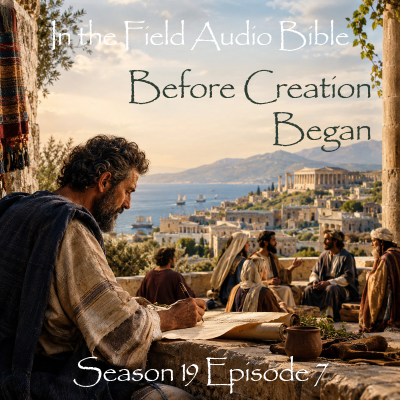
- An immersive, story-driven scene in Corinth: parchment, ink, lamplight, and the early morning hush of a port city waking up
- Paul’s pastoral grief (not anger) as he confronts public scandal and spiritual pride within the Christian community
- A clear biblical principle: sin does not remain isolated—it spreads, shaping the health of the whole church
- A grounded vision of church discipline as courageous truth spoken in love, meant to protect the community and call the sinner back
- A wider conversation about Corinth’s deeper struggles: distorted “freedom,” false wisdom, body-versus-spirit thinking, and fractured unity
Key Themes (for Reflection)
- Holiness and identity: Purity is not superiority—it’s remembering who we are as the body of Christ.
- The leaven principle: What we tolerate quietly can shape a whole community over time.
- Truth without cruelty: Correction becomes Christlike when it is humble, grief-filled, and aimed at restoration.
- Freedom vs. license: Grace does not erase obedience; it empowers it.
- Knowledge vs. wisdom: True knowledge from God produces love that builds up, not pride that tears down.
Scripture Reading
- 1 Corinthians 5 (full chapter)
Memorable Images from the Story
- Lamplight flickering over parchment as Paul prepares to write
- The scent of olive oil and ink lingering in the upper room
- Corinth waking at dawn—vendors, fishermen, and the hum of daily life—while spiritual realities press close
Gentle Reflection Questions
- Where have I confused grace with permission, or silence with love?
- What “small leaven” have I been tempted to normalize in my own life?
- How can I speak truth with a soft heart—without shaming, controlling, or elevating myself?
- What would restoration look like if repentance were real?
Prayer (Closing)
Lord Jesus, give me courage with tenderness. Teach me to love Your church enough to pursue truth, and to pursue truth with humility. Make my heart soft, my words clean, and my motives pure. Where I have been silent out of fear, strengthen me. Where I have been harsh out of pride, humble me. Restore what is broken, and make Your body whole. Amen.
About This Podcast
In the Field Audio Bible is a quiet, immersive Scripture experience designed to help you rest in God’s Word, grow in spiritual maturity, and carry the presence of Christ into everyday life.
Subscribe + Share
If this episode helped you, consider subscribing and sharing it with someone who needs a gentle but courageous invitation back to truth and grace.
00:00 - Sponsor And Opening Invitation
01:08 - Finding Rest In Scripture
03:08 - A Night In Corinth With Paul
10:53 - Sin Spreads Like Leaven
14:13 - Harsh Letter Or Shepherd Love
17:42 - Grace After Truth Is Named
23:56 - Scripture Reading First Corinthians Five
31:08 - Dawn Reflection On Healing Wounds
36:00 - Freedom Twisted Into License
44:06 - Why Resurrection Matters
45:42 - Divisions And Spiritual Immaturity
49:10 - Counterfeit Knowledge Hurts Families
54:31 - Calling People Back With Humility
01:00:30 - Closing Blessing And Share Invitation
In the Field Audio Bible:
The city breathes beneath us—restless, alive, caught between the sacred and the profane. Oil lamps flicker in the narrow stone alleys, casting long shadows across whitewashed walls. The air carries the scent of olives, sea salt, and something sharper—parchment and ink. Somewhere below, merchants close their stalls. Voices echo in Greek and Latin, Aramaic, and the rough dialect of the Peloponnese. But here, in this upper room above the market, the world narrows to something quieter. You sit beside the Apostle Paul. His robe is simple, travel-worn, the fabric creased from months of journeying. He leans over a wooden table, quill poised above parchment. The candlelight catches the silver in his beard, and when he looks up at you, his eyes are heavy with something you cannot quite name—not anger, but a kind of ache. The ache of a shepherd who sees his flock in danger.
In the Field Audio Bible:
"Do you hear it?" Paul asks, his voice low and measured. "The city below—how it sings to itself. How it calls to those who listen." He does not wait for your answer. Instead, he dips his quill into the ink, and the scratch of it fills the silence. Each letter is deliberate, pressed into the parchment like a prayer. You watch the words form, and somehow you know them already—the weight of them, the sorrow beneath them. "There is a matter among the believers here," Paul continues, his eyes returning to the page. "Something that grieves me deeply. Not because I am a judge—I am not. But because I am a father, and I see my children walking toward a cliff they cannot see."
In the Field Audio Bible:
You lean forward slightly, drawn into the gravity of his words. "What has happened, Paul? Tell me." The apostle sets down his quill and turns to face you fully. His expression is tender but resolute, like a man who has carried a burden for longer than he can remember. "There is a man among them," Paul says quietly. "He has taken his father's wife—a thing so grievous that even the pagans of this city speak of it in shame. And yet, do you know what troubles me most?" He pauses, letting the question settle between you. "The church does not mourn. They are proud. They boast. They have grown comfortable with what should break their hearts." The room feels smaller now, the walls closer. Outside, the city continues its endless hum, but in here, there is only the sound of Paul's voice and the memory of his quill. "In my last letter," Paul says, rising from the table and moving toward the window, "I spoke of humility. Of becoming fools for Christ's sake. Of laying down power, not grasping for it. And now I must speak of something harder still—of love that is willing to wound, of discipline that flows from the deepest compassion."
In the Field Audio Bible:
He turns back to you, and his gaze is almost unbearable in its intensity. "Do you understand? This is not cruelty. This is the opposite of cruelty." You struggle to find the words, but finally you ask, "How can discipline be love, Paul?" Instead of answering directly, Paul gestures toward the window. "Come. Walk with me." You rise and follow him to the edge of the room. Below, Corinth sprawls—a city of temples and marketplaces, of wealth and want, of beauty and corruption all tangled together. The harbor glimmers in the distance, ships rocking gently at anchor. Torches flicker along the streets, and you can hear the distant sound of laughter, music, the endless murmur of a city that never truly sleeps. "This city is a crossroads," Paul observes, his voice taking on the quality of a teacher who has walked these streets and knows them intimately. "People come from everywhere, bringing their gods, their customs, their hungers. And the church here—our brothers and sisters—they live in the midst of it. They breathe the same air. They hear the same voices calling to them."
In the Field Audio Bible:
A breeze moves through the window, carrying with it the salt smell of the sea and something sweeter—flowers, perhaps, or incense from a nearby temple. Paul closes his eyes for a moment, as if drawing strength from the night air. "Do you know what leaven is?" he asks, opening his eyes to look at you. "How it works?" You nod slowly. "It spreads through the dough. A little bit leavens the whole batch." "Yes," Paul affirms, and there is something almost grateful in his expression, as if you have understood something essential. "And sin is like that. It does not stay in one place. It spreads quietly until the whole is affected. The church must be pure—not because we are better than others, but because we have been called to something different. We have been called to be the body of Christ."
In the Field Audio Bible:
He turns from the window, and his expression softens slightly, though the weight remains in his eyes. "But listen—listen carefully," Paul says, stepping closer. "When I speak of discipline, I do not speak of judgment in the way the world judges. I do not speak of casting out in anger or shame. I speak of something that requires far more courage than anger ever could." You wait, sensing that Paul is about to reveal something crucial. "Truth," he says simply. "Truth spoken in love. A willingness to say, 'This is not who we are. This is not who you are meant to be.' A willingness to mourn what is lost, and to hope for what can be restored."
In the Field Audio Bible:
A knock at the door interrupts the moment. Paul and you exchange a glance, and he moves to open it. A local man stands in the doorway—one of the leaders of the church, his fine mantle draped carefully, his face troubled and defensive. "Paul," the man says, his voice carrying an edge of accusation, "there is talk. Some say your letters are harsh. They say you judge us from a distance, that you do not understand the struggles we face here in Corinth." Paul does not flinch. He meets the man's eyes with a steadiness that is almost unbearable to witness. When he speaks, his voice is neither defensive nor harsh, but filled with a kind of aching tenderness. "I do not judge from a distance," Paul replies. "I carry you with me. Every day, I carry the weight of this church. And because I carry you, I must speak truth. If I remained silent, what kind of love would that be? What kind of shepherd abandons his flock when wolves approach?" The leader's jaw tightens. He is not comforted, but something in Paul's words has reached him.
In the Field Audio Bible:
Paul continues, his voice becoming more urgent. "Tell me—if your own child were walking toward danger, would you remain silent out of kindness? Or would you cry out, even if your voice startled them?" The local leader shifts his weight, uncomfortable but thoughtful. "You speak as though we are children," he says finally. "We are all children," Paul responds with unexpected gentleness, "learning to walk in the light. The difference is that some of us have stumbled further along the path and can warn those coming behind." The leader nods slowly, and after a long moment, he turns and leaves. The door closes softly behind him, and the room settles back into its quiet intensity. Paul returns to the table, and you sit across from him once more. The parchment is still unrolled, waiting. He picks up his quill, and you sense that something has shifted—that he is ready now to write the words that have been burning in his heart.
In the Field Audio Bible:
"Do you see what I mean now?" Paul asks, though his eyes are on the parchment before him. "This is not easy. It would be easier to say nothing, to let each person find their own way. But that is not love. That is abandonment dressed up as tolerance." You find yourself asking the question that has been forming in your mind since the leader left. "But Paul, how do we know when to speak and when to remain silent? How do we know the difference between judgment and truth?" Paul sets down his quill and looks at you with an expression of deep recognition, as if you have asked the very question he has been waiting for. "You ask the right question," he says. "The answer is this—we do not speak to elevate ourselves. We do not speak to shame or to control. We speak because we have been changed by grace, and we cannot help but long for that same grace for others. We speak as those who have been forgiven much, and who know what forgiveness costs."
In the Field Audio Bible:
He picks up his quill again, and the words flow across the parchment with a kind of sacred urgency:
"It is actually reported that there is sexual immorality among you, and of a kind that even pagans do not tolerate: a man has his father's wife. And you are arrogant! Ought you not rather to mourn? Let him who has done this be removed from among you."
Paul reads the words aloud, his voice steady but laden with sorrow. "These words are not written in anger. They are written in sorrow. In hope. In the belief that even this—even this grievous thing—can be redeemed." You wonder aloud, "What happens next, Paul? What comes after the discipline?" "That is the beautiful part," Paul says, and for the first time that night, a glimmer of something like joy crosses his face. "That is where grace enters. But we must speak truth first. We must name what is broken. Only then can healing begin."
In the Field Audio Bible:
The night deepens around you both. The city below grows quieter, though never silent. Somewhere, a dog barks. Somewhere else, a woman laughs. Life continues, indifferent to the conversation happening in this small room above the market. Paul leans back in his chair, and you sense that he is thinking of all the churches he has planted, all the believers he has tended from a distance, all the letters he has written in the darkness, hoping that his words would reach hearts and change lives. "You will carry this message forward," he says finally, his voice carrying the weight of prophecy. "You will tell others. And they will resist, as the leader resisted. Some will say you are too harsh. Others will say you are too soft. But you must hold fast to this—that discipline and love are not opposites. They are the same thing, seen from different angles."
In the Field Audio Bible:
You struggle with the weight of what he is asking of you. "How do I live this out, Paul? How do I speak truth without becoming hard? How do I love without becoming blind?” Paul reaches across the table and places his hand on yours. His grip is warm, real, the hand of a man who has known suffering and has chosen love anyway. "By remembering always that you, too, are a sinner," he says quietly. "By remembering that you, too, have been forgiven. By keeping your heart soft, even as you speak clearly. And by trusting that God's Spirit will do the work in hearts—not you. You are only the messenger." He stands, and you sense the conversation is shifting, moving toward its close. The parchment is full now, the words complete, waiting to be read aloud, waiting to be heard, waiting to be lived out in the lives of believers in Corinth and beyond. "Come," Paul says, extending his hand. "Let us pray before the dawn breaks. Let us ask God to give us wisdom, courage, and hearts that break for what breaks His heart." You kneel together in the candlelight, the parchment resting on the table beside you. The city breathes on, unaware that in this small room, the future is being written—one word at a time, one conversation at a time, one heart at a time.
In the Field Audio Bible:
Now, let’s take a moment to quiet our hearts and listen to the Word itself. As you hear these verses, let them settle deep within you—bringing comfort when you’re weary, conviction when you need direction, and encouragement for whatever lies ahead. Whether you are nestled in a quiet corner or moving through the busyness of your day, allow God’s Word to meet you right where you are and speak to your soul in this very moment. I hope you have your favorite cup of tea or coffee. Sit back, relax, and let’s step into the sacred text of The First Epistle of Paul to the Corinthians 5.
In the Field Audio Bible:
The First Epistle of Paul to the Corinthians 5 (NRSV):
1 It is actually reported that there is sexual immorality among you and the sort of sexual immorality that is not found even among gentiles, for a man is living with his father’s wife.
2 And you are arrogant! Should you not rather have mourned, so that he who has done this would have been removed from among you?
3 For I, though absent in body, am present in spirit, and as if present I have already pronounced judgment
4 in the name of the Lord Jesus on the man who has done such a thing. When you are assembled and my spirit is present with the power of our Lord Jesus,
5 you are to hand this man over to Satan for the destruction of the flesh, so that the spirit may be saved in the day of the Lord.
6 Your boasting is not a good thing. Do you not know that a little yeast leavens all of the dough?
7 Clean out the old yeast so that you may be a new batch of dough, as you really are unleavened. For our paschal lamb, Christ, has been sacrificed.
8 Therefore, let us celebrate the festival, not with the old yeast, the yeast of malice and evil, but with the unleavened bread of sincerity and truth.
9 I wrote to you in my letter not to associate with sexually immoral persons,
10 not at all meaning the sexually immoral of this world, or the greedy and swindlers, or idolaters, since you would then need to go out of the world.
11 But now I am writing to you not to associate with anyone who bears the name of brother or sister who is sexually immoral or greedy or an idolater, reviler, drunkard, or swindler. Do not even eat with such a one.
12 For what have I to do with judging those outside? Are you not judges of those who are inside?
13 God will judge those outside. “Drive out the wicked person from among you.”
In the Field Audio Bible:
The lamps in Corinth burn low, their flames flickering against the first hints of dawn. The city, once restless and alive, now settles into a hush, as if holding its breath. On the rooftop, the stones still radiate the warmth of yesterday's sun, and the salty wind from the gulf carries the distant clang of a fisherman's bell. In the upper room, the air is thick with the scent of olive oil and the lingering sharpness of ink—remnants of a night spent in honest conversation and trembling hope. Paul stands at the window, his silhouette framed by the pale blue light. His robe, simple and travel-worn, stirs in the breeze. You sit nearby, wrapped in a borrowed cloak, parchment and quill set aside. The silence between you is not empty, but full—like the pause between verses of a psalm, or the hush before a blessing. Below, the city stirs. A woman with a basket of figs moves quietly through the alley, her sandals whispering against the stone. Somewhere, a child calls out in Greek, laughter echoing off the walls. The world goes on, unaware of the burdens carried in this quiet room above the market.
In the Field Audio Bible:
Paul's voice, when it comes, is softer now—hoarse with the weight of what has been spoken. He looks out over the city, his words meant for you, for the church, for all who would listen: "Discipline is never easy. It is a wound meant for healing, a sorrow that leads to hope. Remember, my friend, that love is not silent in the face of harm. It speaks, even when the words are hard." You find yourself remembering the faces of those you've met in Corinth: the merchant who pressed coins into your hand at the market, the widow who offered a prayer at the synagogue door, the young man who lingered in the shadows, uncertain but listening. Each of them is part of this story—each one shaped by the courage to name what is broken and the grace to believe in what can be restored. The door opens quietly, and the local leader from the night before enters. His expression is changed—no longer defensive, but reflective, as if the night's words have taken root. He carries with him a sense of burden, as if the weight of the church has settled more fully on his shoulders. He offers bread, still warm from the oven, and for a moment, the three of you share a simple meal. No one speaks of the letter or the sorrow it carries. Instead, you break bread, pour oil, and watch the morning light catch on the rim of the clay cup.
In the Field Audio Bible:
As you eat, the leader speaks hesitantly, his voice carrying the uncertainty of a man wrestling with profound questions. "Paul, I have been thinking through the night. This man who has taken his father's wife—he is not alone in his sin. There are others in the church who live as though the old ways still govern them. They say that what they do in their bodies has nothing to do with their faith. They claim that this knowledge sets them free from the law of morality." Paul sets down his bread and turns to face the leader fully. His expression is grave, but not unkind. "This is the very heart of the struggle here in Corinth, is it not? You have been touched by so many philosophies, so many ways of thinking. The Stoics say one thing, the Epicureans another. And now some among you have taken the freedom you have in Christ and twisted it into license." You listen intently, sensing that Paul is articulating something essential—something that will echo through the ages. The morning light grows stronger, painting the room in shades of gold and amber.
In the Field Audio Bible:
"Tell me," Paul continues, his voice taking on the cadence of a teacher, "what is this knowledge they speak of? The leader leans forward, his hands clasped before him. "They say that the body is merely flesh, temporary and insignificant. The spirit is what matters. Therefore, they argue, what the body does—whether in fornication or in eating meat sacrificed to idols—cannot touch the soul. They believe themselves enlightened, freed from the constraints that bind ordinary believers." Paul rises and begins to walk, his movements deliberate, as if his body itself is part of his teaching. "This is a grave error. A deception dressed in the language of wisdom. Do they not understand that the body is not separate from the spirit? That we are not divided creatures, but whole? When a man joins himself to a prostitute, he does not merely use his body—he joins his very self, his whole being, to that act. The body is not a thing to be discarded or despised. It is the temple of the Holy Spirit." You wonder aloud, your voice quiet but urgent: "Paul, how do we help them see this? They seem so convinced of their own understanding."
In the Field Audio Bible:
Paul pauses at the window, and you see the weariness in his shoulders, the toll that this pastoral care has taken. "This is the struggle of the church in Corinth. They have been given much—they have received the gospel, they have been baptized, they have been given the gifts of the Spirit. And yet they remain infants in their faith. They are puffed up with pride, thinking themselves wise when they are still learning to walk." The leader nods slowly, as if recognizing himself in this description. "There is more," he says quietly. "Some among us have begun to question the resurrection itself. They say that the resurrection is merely spiritual—that it happened already, in the moment of conversion, and that there is no future bodily resurrection to come. They mock those who speak of the dead rising." Paul's expression becomes even more serious. He turns from the window, and his eyes are intense, burning with the urgency of truth. "This is perhaps the gravest error of all. For if there is no resurrection, then Christ has not been raised. And if Christ has not been raised, then our faith is empty, our sins are not forgiven, and we are of all people most to be pitied."
In the Field Audio Bible:
You feel the weight of these words settle upon you like a mantle. The implications are staggering—the entire foundation of faith rests upon this single truth. "But there is more still," Paul says, and his voice carries a note of deep concern. "There is the matter of divisions among you. Some say, 'I follow Paul.' Others say, 'I follow Apollos.' Still others claim allegiance to Cephas, or to Christ himself, as if Christ were merely one faction among many. This is the pride that comes from spiritual immaturity. You are dividing the body of Christ, tearing it apart with your quarrels and your factions." The leader shifts uncomfortably, and you sense that this accusation strikes close to home. "We have not meant to divide," he says defensively. "We simply recognize that different teachers have different gifts, different ways of speaking." "Of course they do," Paul replies, his tone not harsh but firm. "But you have made the mistake of elevating the teacher above the teaching. You have forgotten that all of us—whether I or Apollos or Cephas—are merely servants of Christ. We are workers in His field, planting and watering, but it is God who gives the growth. The church is not divided into factions based on human preference. It is one body, with many members, all serving one Lord."
In the Field Audio Bible:
As Paul speaks, you notice a young woman entering the room—perhaps a servant, or a member of the household. She carries a pitcher of water and fresh cloths. She moves quietly, respectfully, but her eyes are alert, listening. When she sets down the pitcher, she hesitates, as if wanting to speak but uncertain whether she should. Paul notices her hesitation. "Speak, daughter. What is on your heart?" The young woman glances at the leader, then back to Paul. Her voice, when it comes, is soft but steady. "My brother is one of those who claims this knowledge. He says that because he understands the mysteries of God, he is free to do as he wishes. He has left his wife and taken up with a woman from the temple of Aphrodite. When I asked him how this could be right, he said that I was too simple to understand, that my faith was weak and unenlightened." Paul's expression softens with compassion. He gestures for her to sit, and she does, perching on the edge of a bench, her hands folded in her lap. "Your brother has confused knowledge with wisdom," Paul says gently. "He has mistaken the ability to speak about deep things with the ability to live rightly. But true knowledge—the knowledge that comes from God—always leads to love. It always leads to the building up of the body, not its tearing down. If your brother's knowledge has led him to abandon his wife, to join himself to a prostitute, then his knowledge is not from God. It is a counterfeit, a shadow of the real thing." The young woman's eyes fill with tears. "Can he be saved? Can he return?" Paul reaches out and takes her hand. "Yes. Always yes. This is the hope of the gospel. No sin is beyond the reach of God's grace. But first, he must see his sin. He must mourn what he has done. And the church must help him see—not through judgment that shames, but through truth that loves."
In the Field Audio Bible:
As the morning light grows stronger, you find yourself thinking about the nature of the struggle in Corinth. It is not simply about one man's sin, though that is grave. It is about a fundamental misunderstanding of what it means to be a follower of Christ. It is about the tension between freedom and responsibility, between knowledge and wisdom, between the spiritual and the physical, between unity and division. Paul stands and moves to the table where the parchment still rests. He picks it up, reading over the words he has written. "This letter will be difficult for them to receive. Some will be angry. Some will defend themselves. But it must be written. The body cannot be whole if we pretend that the infection does not exist." The leader rises as well. "And what of those who have been led astray by these false teachers? How do we help them find their way back?" "With patience," Paul says. "With gentleness. With the knowledge that you, too, are capable of being deceived. You must speak truth, yes, but always with humility. Always remembering that the work of transformation belongs to God, not to you. Your task is to plant the seed of truth and to water it with your prayers and your love. The growth is God's work."
In the Field Audio Bible:
The young woman stands to leave, and Paul places a hand on her shoulder. "Tell your brother that he is loved. Tell him that the church grieves for him, not because we judge him, but because we see him walking away from life itself. And tell him that if he repents, if he turns back, he will be received with joy. This is the heart of the gospel." As she departs, you and Paul and the leader stand in the growing light. The city below is fully awake now—the sounds of commerce and daily life filling the air. But in this room, there is a profound stillness, a sense of standing at a threshold between judgment and mercy, between truth and grace. Paul's eyes meet yours, and you see in them the burden of pastoral care, the weight of speaking hard truths in love. "Do you understand now why this letter must be written? Why discipline must be exercised? It is not because we are harsh or unforgiving. It is because we love. It is because we believe that the body of Christ is worth fighting for, worth protecting, worth calling back to its true identity."
In the Field Audio Bible:
You nod, and the understanding settles deep within you. This is the work of the church—to speak truth in love, to mourn what is broken, to call people back from the cliffs they cannot see, to remind them of who they are meant to be. Paul's eyes meet yours, the lines around them deepened by fatigue and something like hope. "The work is not finished," he murmurs. "There will be more letters, more conversations, more nights like this. But do not lose heart. The body is made whole by many hands—by truth spoken gently, by wounds that heal, by love that endures." As the sun crests the hills beyond the city, golden light spills across the rooftops, painting Corinth in hues of amber and rose. The city awakens, merchants calling out in the agora, priests tending lamps at the temple, fishermen hauling nets from the sea. You rise, gathering your cloak, the memory of Paul's words settling deep in your bones. You descend the narrow stairs, feet echoing on the worn stone. The market is alive again—vendors arranging figs and olives, children darting between baskets, the air filled with the promise of a new day. But something in you has changed. You carry with you the weight of truth, the hope of restoration, and the quiet courage to speak love, even when it wounds. Behind you, Paul lingers in the doorway, watching as you step into the morning. His blessing follows you—a whisper in the wind, a prayer woven into the fabric of the day: that you would walk in sincerity and truth, that you would mourn what is lost and rejoice in what is restored, that you would help make the body whole. And so, the story continues. The city of Corinth, ancient and eternal, waits for what comes next. And you—listener, disciple, friend—walk forward, heart open, ready to love and to lead.
In the Field Audio Bible:
Thank you for sharing this sacred moment with me as we explored 1 Corinthians Chapter 5 together. May these words take root in your heart, guiding you through the days ahead and reminding you that God walks beside you—in every challenge, every decision, and every act of faith. If today’s reflection has brought you hope or comfort, I invite you to pass it along to someone who might need a gentle reminder of God’s presence. And don’t forget to come back next time as we continue this journey—growing together, deepening our faith, and remaining steadfast “in the field” of God’s promises. Until next time, may you discover peace in quiet moments, trust the gentle call of God, and rest securely in His unchanging love.
This is In the Field Audio Bible—where we Listen to the Bible One Chapter at a Time.
