Apple Podcasts
 Spotify
 Youtube Music
 iHeartRadio
 Amazon Music
 Podchaser
 JioSaavn
  RSS Feed
 Religious Lies Exposed: What God Really Demands
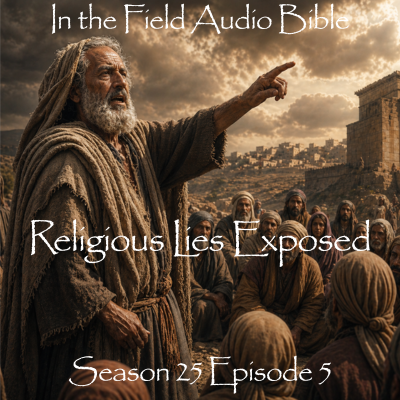
Hear Amos' funeral lament over Israel as religious lies are exposed and outward worship masks inward corruption. This deepening confrontation calls you to seek God, not symbols, and insists that justice flow like waters and righteousness stream endlessly. The day of the Lord brings darkness unless hearts turn toward true repentance and righteousness reshapes daily choices, community care, and how we treat vulnerable and oppressed with mercy and truth. God's call remains personal.
In Amos 5, you step into the crowded gates and courtyards of Israel and hear a lament that sounds like a funeral song—spoken over a people who are still breathing, still buying and selling, still singing hymns, and yet quietly dying inside. Religious lies exposed, outward worship masks inward corruption, and Amos comes to tear back the veil. The shepherd-prophet from Tekoa does not come to entertain or flatter. He comes carrying the grief of God and the fierce mercy of a warning: Seek the Lord and live.
This chapter continues the confrontation in Amos 4, and the tone deepens. The message is not only an indictment—it is sorrow, invitation, and a call to return. You will hear the tension between outward worship and inward corruption, between religious noise and true righteousness, and between the “day of the Lord” people assume will save them and the darkness it will bring if they refuse to repent.
What You’ll Hear in This Episode
- A prophetic lament over Israel—a nation described as fallen, forsaken, and in need of resurrection
- The repeated invitation to seek God, not symbols—not Bethel, Gilgal, or Beersheba
- A piercing contrast between religious activity and justice in the streets
- A warning about the day of the Lord—not as celebration, but as exposure
- A vision of what God desires: justice rolling like waters and righteousness like an unending stream
Key Themes (for Reflection)
- True repentance: turning back to God with your life, not just your lips
- Justice and worship: God refuses worship that ignores the oppressed
- The danger of spiritual confidence: assuming God is “with us” while living against His heart
- The remnant and mercy: even in judgment, God’s call to “seek and live” remains
Scripture Focus
- Amos 5 (Old Testament)
Reflection Questions
- Where have you mistaken religious routine for relationship with God?
- What does “seek the Lord and live” look like in your daily choices this week?
- Are there places where you benefit from systems that harm others—even quietly?
- If justice is meant to “roll down like waters,” what would need to change in your home, work, or community?
A Simple Spiritual Practice (5 minutes)
- Sit in silence and breathe slowly.
- Whisper: “Lord, help me seek You.”
- Ask: “Where have I been avoiding justice?"
- End with: “Let righteousness begin in me.”
Closing Encouragement
If Amos 5 feels heavy, you’re not alone. This is a chapter that pulls back the curtain and tells the truth—because God loves His people too much to let them keep walking toward ruin. The lament is not the end of the story; it is the mercy of a warning, and the doorway to a return.
Connect + Next Steps
- If this episode stirred a prayer request or a question, you’re welcome to reach out.
- Share this episode with someone who needs courage to pursue justice with a tender heart.
Episode Details
- Podcast: In the Field Audio Bible
- Episode Title: Religious Lies Exposed: What God Really Demands
- Category: Season 25 Episode 5 | Amos 5 | Old Testament | Minor Prophet
00:33 - Sponsor And Welcome
03:00 - Walking With Amos Toward Bethel
08:15 - Bethel Market Tension Rises
09:48 - The City Gate Loses Justice
17:15 - Priests Challenged On True Worship
23:33 - Amos Chapter Five Read Aloud
25:56 - Pleiades Pronunciation Detour
26:29 - Justice Rolls Down Like Water
31:30 - Lament Turns Toward Returning
54:32 - Closing Blessing And Quiet Hope
In the Field Audio Bible:
The wind carries a mournful song through the hills of Israel, brushing over wild thyme and barley that bend beneath the dawn. You walk beside Amos, the prophet's cloak heavy with dust and dew, his staff tracing the old paths from Tekoa toward Bethel. The sky is pale, streaked with the first gold of morning, yet something in the air feels wrong—a restless hush that settles just before a reckoning, as if the very land holds its breath, waiting for judgment to fall. Amos moves with quiet urgency, his gaze fixed on the horizon where the ridges of Judah meet the sky. He pauses among the olive trees, their branches gnarled and ancient, reaching out like hands remembering the first stories of this land. In the distance, the rooftops of a village shimmer in the new light, smoke rising from hearths where women knead bread and children chase each other through the dust. But Amos does not smile at this ordinary scene. Instead, his face is shadowed, marked by a sorrow that seems to come from somewhere deeper than the morning itself.
In the Field Audio Bible:
He turns to you, his voice low and threaded with grief. "Do you feel it, friend? The weight in the air? The lament of Israel weaves through every field and market, every song and silence. The Lord's heart aches for His people—not in anger, but in the deepest sorrow of love betrayed." You nod, feeling the weight of his words settle in your chest like a stone. The air is thick with memory—of promises made at Sinai, of feasts and festivals, of justice once sung in the city gate. The prophet's eyes search yours, and you see in them both fire and tears. "Today," he says, "you will walk with me to Bethel. You will see what the Lord sees. You will hear what He hears. And you will understand why I sing a funeral song for a people who have not yet died, but are dying." As you set out together, the landscape unfolds in layers: terraces of figs and pomegranates, vineyards heavy with dew, shepherds guiding flocks along narrow trails. The sun climbs, painting the hills in amber and rose. Farmers call out to one another, voices mingling with the bleating of goats and the distant ring of a blacksmith's hammer. It is a land of beauty, a land of plenty. Yet beneath this ordinary morning, you sense the approaching darkness—the day of the Lord, when all that is false will be stripped away.
In the Field Audio Bible:
A young boy approaches, his tunic patched and dusty, eyes wide with curiosity. "Are you Amos? The one who speaks for God?" he asks, glancing between you and the prophet. Amos kneels, his hand gentle on the boy's shoulder. "I am only a shepherd and a gatherer of sycamore figs. But the Lord has given me a word for His people. Will you listen with us?"The boy nods, clutching a slingshot in one hand. "My mother says the Lord is angry. Is it true?" Amos' face softens, sorrow flickering in his eyes like a candle about to be snuffed out. "The Lord is not angry as men are angry, child. He is grieved—deeply grieved that His people have turned from justice, that their songs have grown hollow, that their hearts chase after comfort instead of truth. The Lord weeps because He loves them, and they have forgotten how to love Him in return."
In the Field Audio Bible:
You walk on, the boy trailing behind, as the road winds toward Bethel. The fields give way to orchards, then to the bustle of the city's edge. Merchants haggle over baskets of dates and honey, their laughter masking a tension that simmers beneath the surface. Women draw water at the well, pausing to whisper as Amos passes by. You notice how people react to the prophet—some with fear, some with curiosity, some with the hardened indifference of those who have heard warnings before and chosen not to listen. A merchant calls out, "Prophet, what word do you bring today? Will the Lord bless our trade?" Amos stops, his voice carrying over the crowd with the weight of prophecy. "Seek the Lord and live, lest He break out like fire in the house of Joseph, and it devour, with none to quench it for Bethel." The words hang in the air, sharp and urgent. Some scoff, others turn away, but a few linger, their faces marked by worry and wonder. You feel the tension between those who dismiss the prophet and those who sense the truth in his words.
In the Field Audio Bible:
The city gate looms ahead, carved with symbols of Israel's past glory—the lion of Judah, the symbols of covenant and promise. Elders gather in its shadow, robes bright against the stone, voices raised in debate about trade and taxes and the maintenance of their prosperity. Amos slows, his steps deliberate, and you slow with him. "This is where justice was meant to dwell," he murmurs to you, his voice barely above a whisper. "Where the poor found refuge and the stranger was welcomed. Where the widow could cry out and be heard. Now it is only a place of commerce and power." The elders notice the prophet's approach. One, his beard silvered with age, greets Amos with a measured nod. "Shepherd, what brings you from Tekoa?" Amos stands tall, his voice steady and filled with the weight of the Lord's burden. "I come with a lament—a funeral song for the house of Israel. For justice has fallen in the street, and righteousness cannot enter. The day of the Lord is coming, and it will not be light, but darkness."
In the Field Audio Bible:
A hush falls. The gate, once a place of laughter and judgment, now feels like a tomb. You stand with Amos in this ancient moment, the weight of history pressing close, and you understand that you are witnessing something sacred and terrible: the moment when a prophet speaks truth to a people who have forgotten how to listen. The elders exchange glances, uncertainty rippling through their ranks. One steps forward, his staff tapping against the stone. "Amos, you speak in riddles and laments. Speak plainly—what does the Lord require of us?"
In the Field Audio Bible:
Amos' gaze sweeps across the gathered men, then beyond them to the streets of Bethel where merchants count coins and priests prepare the altars for another day of ritual. "Seek good, and not evil, that you may live; and so the Lord, the God of hosts, will be with you, as you have said. But you have not sought good. You have sought comfort. You have sought wealth. You have sought power. And in seeking these things, you have trampled justice beneath your feet." You notice the shift in the prophet's voice—no longer thunder, but an invitation, tender and urgent, like a father pleading with a wayward child. A young scribe, his hands stained with ink, steps closer. "But Prophet, we keep the feasts. We offer sacrifices. We sing in the synagogues. Is this not good?" Amos turns to him, compassion and sorrow mingling in his expression. "I hate, I despise your feasts, and I take no delight in your solemn assemblies. But let justice roll down like waters, and righteousness like an ever-flowing stream. Your worship has become a mask, hiding the emptiness beneath. The Lord does not desire the blood of rams and goats. He desires the hearts of His people—hearts that hunger for justice, that weep for the broken, that stand in the gap for the poor."
In the Field Audio Bible:
An old woman, her back bent from years of labor, approaches from the crowd. Her face is weathered, her eyes bright with tears. "Prophet, my grandson was taken by soldiers for a debt his father could not pay. Is there no mercy in the Lord's heart?" Amos reaches out, his hand steady and warm. "The Lord's heart is full of mercy, mother. But mercy without justice is a lie. Justice without mercy is cruelty. The Lord calls for both—woven together like the warp and weft of cloth. And Israel has torn that cloth apart." The woman nods, something shifting in her expression—not comfort, but understanding. Around you, the crowd grows. Word spreads through the streets that Amos has come to Bethel, and people emerge from their homes, their shops, their fields. A potter, clay still clinging to her hands. A tax collector, his ledgers tucked beneath his arm. A widow with her two daughters. A soldier in bronze armor, his face hardened by campaigns. All are drawn by the prophet's presence, sensing that something momentous is happening.
In the Field Audio Bible:
Amos moves deeper into the city, and you follow, the crowd flowing around him like water around stone. The streets narrow, the buildings pressing close, their walls painted in faded blues and reds. Incense drifts from the temple, mingling with the smell of bread baking in ovens and animal dung in the streets. The contrast is sharp—the beauty of ritual and the ugliness of neglect, side by side, in the same city. At the temple entrance, priests in white linen stand guard, their expressions wary. One, older than the rest, steps forward. "Amos of Tekoa, you are not welcome here to speak against our worship. The Lord is pleased with our offerings and our devotion." Amos does not flinch. "I am not here to speak against worship, but to call it true. The Lord does not desire the blood of rams and goats, the fat of fed beasts. He desires the hearts of His people—hearts that hunger for justice, that weep for the broken, that stand in the gap for the poor."
In the Field Audio Bible:
You sense the tension rising, the air growing thick as storm clouds gather overhead. The priest's face darkens. "You blaspheme. You speak as though the Lord's ordained worship means nothing." "No," Amos replies, his voice steady and clear. "I speak as though the Lord's ordained justice means everything. Worship without justice is a stench in His nostrils. Ritual without righteousness is an abomination." A young priest, barely more than a boy, looks troubled. He glances at you, then back at Amos. "But how do we know what the Lord truly desires? How do we hear His voice?" Amos' expression softens. "Listen to the cries of those who suffer. Listen to the silence of those who have been silenced. Listen to the groaning of the land itself. These are the Lord's voice, speaking through the mouths of the broken." The crowd murmurs, some in agreement, others in protest. You notice a woman in the back, her fine linen marking her as wealthy, frowning deeply. Beside her stands a man in expensive dyes, his rings heavy with gold. These are the ones Amos speaks against—the comfortable, the prosperous, those who have built their peace on the backs of others.
In the Field Audio Bible:
The prophet moves through the temple courtyard, his eyes taking in every detail: the ornate carvings, the gleaming altars, the incense burning in abundance. His voice, when he speaks, carries both beauty and sorrow. "How beautiful are your sanctuaries, Israel. How carefully you have adorned the house of the Lord. But beauty without justice is a tomb. Splendor without mercy is a grave." A merchant, his arms laden with bolts of fine cloth, mutters to his companion, "He speaks treason. He undermines the very foundations of our faith." But an old man, his face creased with wisdom and sorrow, steps forward. "No," he says quietly. "He speaks truth. I remember when the gate was a place of justice. I remember when the poor could find refuge. I remember when our songs were not hollow." Amos turns to the old man, and for a moment, the two stand together—prophet and witness, speaking across the years to a people who have forgotten their own story. You feel it then, the weight of history pressing close: the exodus from Egypt, the covenant at Sinai, the wilderness wandering, the entry into the promised land. All of it echoes in this moment, in this city, in the words of a shepherd who dares to call his people back to their first love.
In the Field Audio Bible:
Now, let’s take a moment to quiet our hearts and listen to the Word itself. As you hear these verses, let them settle deep within you—bringing comfort when you’re weary, conviction when you need direction, and encouragement for whatever lies ahead. Whether you are nestled in a quiet corner or moving through the busyness of your day, allow God’s Word to meet you right where you are and speak to your soul in this very moment. I hope you have your favorite cup of tea or coffee. Sit back, relax, and let’s step into the sacred text of The Book of Amos Chapter 5.
In the Field Audio Bible:
The Book of Amos 5 (NRSV):
1 Hear this word that I take up over you in lamentation, O house of Israel:
2 Fallen, no more to rise,
is maiden Israel;
forsaken on her land,
with no one to raise her up.
3 For thus says the Lord GOD:
The city that marched out a thousand
shall have a hundred left,
and that which marched out a hundred
shall have ten left.
4 For thus says the LORD to the house of Israel:
Seek me and live,
5 but do not seek Bethel,
and do not enter into Gilgal
or cross over to Beer-sheba,
for Gilgal shall surely go into exile,
and Bethel shall come to nothing.
6 Seek the LORD and live,
or he will break out against the house of Joseph like fire,
and it will devour Bethel, with no one to quench it.
7 Ah, you who turn justice to wormwood
and bring righteousness to the ground!
8 The one who made the Pleiades and Orion
and turns deep darkness into the morning
and darkens the day into night,
who calls for the water of the sea
and pours it out on the surface of the earth,
the LORD is his name,
9 who makes destruction flash out against the strong,
so that destruction comes upon the fortress.
10 They hate the one who reproves in the gate,
and they abhor the one who speaks the truth.
11 Therefore because you trample on the poor
and take from them levies of grain,
you have built houses of hewn stone,
but you shall not live in them;
you have planted pleasant vineyards,
but you shall not drink their wine.
12 For I know how many are your transgressions
and how great are your sins—
you who afflict the righteous, who take a bribe
and push aside the needy in the gate.
13 Therefore the prudent will keep silent in such a time,
for it is an evil time.
14 Seek good and not evil,
that you may live,
and so the LORD, the God of hosts, will be with you,
just as you have said.
15 Hate evil and love good,
and establish justice in the gate;
it may be that the LORD, the God of hosts,
will be gracious to the remnant of Joseph.
16 Therefore thus says the LORD, the God of hosts, the Lord:
In all the squares there shall be wailing,
and in all the streets they shall say, “Alas! Alas!”
They shall call the farmers to mourning
and those skilled in lamentation to wailing;
17 in all the vineyards there shall be wailing,
for I will pass through the midst of you, says the LORD.
18 Woe to you who desire the day of the LORD!
Why do you want the day of the LORD?
It is darkness, not light,
19 as if someone fled from a lion
and was met by a bear
or went into the house and rested a hand against the wall
and was bitten by a snake.
20 Is not the day of the LORD darkness, not light,
and gloom with no brightness in it?
21 I hate, I despise your festivals,
and I take no delight in your solemn assemblies.
22 Even though you offer me your burnt offerings and grain offerings,
I will not accept them,
and the offerings of well-being of your fatted animals
I will not look upon.
23 Take away from me the noise of your songs;
I will not listen to the melody of your harps.
24 But let justice roll down like water
and righteousness like an ever-flowing stream.
25 Did you bring to me sacrifices and offerings the forty years in the wilderness, O house of Israel?
26 You shall take up Sakkuth your king and Kaiwan your star god, your images, which you made for yourselves;
27 therefore, I will take you into exile beyond Damascus, says the LORD, whose name is the God of hosts.
In the Field Audio Bible:
The sun climbs higher, casting sharp shadows across the courtyard. The crowd grows restless, some leaving in anger, others staying, drawn by something they cannot name. The air crackles with possibility—the possibility of change, the danger of resistance, the hope of return. Yet beneath it all, you sense the approach of the day of the Lord, dark and inevitable. Amos raises his staff, and the crowd quiets. "Hear this word that I take up over you, O house of Israel: Fallen, no more to rise, is the virgin Israel; forsaken on her land, with no one to raise her up." The words are a lament, a funeral song for a nation that has not yet died but is dying. And in that moment, standing in the temple courtyard of Bethel, you understand the prophet's grief—not anger, but the deep sorrow of one who loves and watches that love be rejected.
In the Field Audio Bible:
The streets of Bethel close in around you and Amos, the crowd's voices hushed by the weight of his lament. Amos' words echo like a funeral bell: "Hear this word, O house of Israel: The virgin Israel has fallen. She will rise no more. In every street, there will be wailing; in every field, lamentation." You walk beside Amos, your heart aching with his sorrow. "Amos," you ask, your voice raw with emotion, "must it truly end this way? Is there no hope left for these people?"
In the Field Audio Bible:
Amos' steps slow. He looks at you, his eyes shining with both grief and a faint, desperate hope. "Hope lives only in returning, friend. But first, the people must mourn what they have lost. You cannot heal what you refuse to grieve." You press further, struggling to understand. "But you speak of exile, of cities coming to nothing. Has the Lord truly turned away from His people?" Amos shakes his head slowly. "The Lord does not abandon His people. He removes false comfort so true comfort can be found. When a mother takes away what harms her child, she grieves with him as he suffers the cure. The Lord's heart breaks as He calls Israel back, but they will not listen. Not yet."
In the Field Audio Bible:
A mother steps from a doorway, clutching her child close. Her voice trembles with fear and desperation. "Prophet, must we all mourn? My daughter asks why the Lord has hidden His face. What do I tell her?" Amos gently places his hand on her shoulder, his touch both firm and tender. "The Lord stands at the gate, weeping with you. He has not hidden His face—you have turned away from His gaze. There is comfort only in returning. Do not seek false comfort in Bethel, nor enter Gilgal, nor cross to Beersheba; for Gilgal shall go into exile, and Bethel shall come to nothing. Seek the Lord and live, lest He break out like fire." The mother's tears fall freely. "But how do we return when we do not know where we have strayed? The path seems lost to us." Amos' voice becomes almost musical, each word a note in the funeral dirge. "The path is written in your conscience, mother. It is in every hungry mouth you pass, every widow's cry, every orphan's tears. The Lord speaks through the suffering of His people. Listen to them, and you will hear His voice calling you home."
In the Field Audio Bible:
You feel the sorrow in your chest deepening. "Amos, how can a mother teach her children to seek the Lord when their bellies are empty? When the wealthy trample them beneath their heels? How is that justice? How is that the love of God?" Amos turns to you, his gaze steady and penetrating. "You ask the true question, friend—the question that burns in the heart of every suffering person. Come, walk with me deeper into this city, and I will show you the answer written in the very stones of Bethel." You and Amos move deeper into the square, where merchants count coins and the poor sit in shadow, their eyes hollow with hunger and despair. A merchant, his scales gleaming in the sun, calls out bitterly, "But what of our success, Amos? Have we not prospered? Do not our riches prove the Lord's favor? My father built this business from nothing. My children will inherit it. Is this not the Lord's blessing?"
In the Field Audio Bible:
Amos turns, his face shadowed with grief. "You turn justice to wormwood and cast righteousness to the ground. You trample the poor and exact taxes of grain from those who have nothing. You build houses of hewn stone, but you shall not dwell in them. You plant pleasant vineyards, but you shall not drink their wine." The merchant's face reddens with anger. "You speak in riddles, prophet. What do you mean?" Amos' voice drops, heavy as a stone. "I mean that what you have built on injustice will crumble. The Lord will not allow His people to prosper through the suffering of others. Your houses will be taken. Your vineyards will be stripped. This is not cruelty—this is mercy, calling you back before it is too late." You step forward, compelled to speak. "Amos, the merchant says he has prospered. Is prosperity itself a sin? Are we to have nothing, to build nothing?"
In the Field Audio Bible:
Amos’ voice softens, becoming almost musical in its sorrow. "No, friend. Prosperity is a gift from the Lord's hand. But when prosperity is built upon the broken backs of the poor, when wealth grows fat while justice starves, then the gift becomes a curse. The Lord does not condemn riches—He condemns the heart that forgets where riches come from and to whom they truly belong.” You nod, understanding beginning to dawn like the first light after a long night. "So the lament is not for what they have, but for what they have become?" "Yes," Amos whispers, and his voice carries the weight of ages. "Israel was called to be a light to the nations, a people of justice and mercy. Instead, she has become a people of mirrors, reflecting only her own image, blind to the suffering around her. The Lord's lament is for the bride who has forgotten her bridegroom."
In the Field Audio Bible:
An elderly woman, her face lined with the deep grief of years, steps forward from the crowd. Her voice is quiet but carries the weight of unbearable loss. "Prophet, I have lost three sons to war. I have lost my husband to debt. I have nothing left but the clothes on my back. You speak of justice, but where was justice for me? Where was the Lord's mercy when my children were taken?" Amos approaches her slowly, reverently, as if approaching holy ground. His eyes glisten with tears. "Mother, your grief is the Lord's grief. Your cry is His cry. This is why I sing this lament—because the Lord sees every tear you have shed, every child you have lost. He does not turn away from your suffering." The woman's voice trembles. "Then why does He allow it? Why does He not stop the wealthy from crushing us?" Amos takes her weathered hands in his own, holding them as if they are precious. "Because the Lord has given His people free will. He calls them to justice, but they choose oppression. He calls them to mercy, but they choose cruelty. The lament is the Lord's way of saying, 'I see. I grieve. Return to me, and I will restore.'" You feel tears on your own cheeks now. "Amos, if the Lord grieves, if He sees all this suffering, why does He not simply end it? Why this lament? Why not just restore them?" Amos releases the woman's hands and turns to you. "Because restoration without repentance is not true restoration, friend. It is only a postponement of the same sin. The Lord loves His people too much to leave them in their blindness. He sends the lament—the funeral song—to awaken them, to break their hearts open so that healing can begin."
In the Field Audio Bible:
A hush falls over the crowd. The city's pride is pierced by the prophet's sorrow. You stand in the midst of the people, feeling the tension between comfort and conscience, prosperity and poverty, ritual and righteousness. The day of the Lord draws near, and everyone senses it. A group of young men, their voices defiant and hard, jeer from the edge of the square. "Who are you to mourn for us, Amos? Who are you to judge? You are nothing but a shepherd, a dresser of figs. What do you know of our lives?" You feel anger rise in your chest at their mockery, but Amos simply closes his eyes. When he opens them again, there is no anger in his gaze—only a profound sadness. He speaks to you, not to them, but his words are meant for all who have ears to hear.
In the Field Audio Bible:
"Do you see them, friend? These young men who mock? They are the future of Israel, yet they know not the God of their fathers. They have inherited a faith without substance, a religion without righteousness. This is the deepest lament of all." You ask softly, "Can they not be awakened, Amos? Can they not yet turn?" Amos’ reply is measured, each word falling like a stone into still water. "Some will. Some will hear the lament and let it break their hearts open. But others—" He pauses, his voice dropping to barely a whisper. "Others have made their choice. They have chosen comfort over conscience, and comfort will be their undoing."
In the Field Audio Bible:
One of the young men steps forward, his face twisted with anger. "You speak as if we are already dead, prophet. You sing our funeral song while we yet live. Is this not a curse you place upon us?" Amos' reply is weary, but resolute. "I am no prophet, nor the son of a prophet. I am a herdsman, a dresser of sycamore figs. But the Lord took me from following the flock and said, 'Go, prophesy to my people Israel.' I mourn because the Lord mourns. I sing this lament because the land weeps beneath your feet." The young man's voice wavers, and for a moment, you see doubt flicker across his face. "But what if we wish to change? What if we wish to return?" Amos' face brightens, a ray of hope piercing the sorrow. "Then you must begin with tears. You must weep for the poor you have ignored. You must weep for the widows you have forgotten. You must weep for the justice you have trampled. And then—only then—can you seek the Lord and live."
In the Field Audio Bible:
You turn to Amos, your voice trembling with a new understanding. "Then this lament—this funeral song—it is not an ending, is it? It is a call?" Amos places his hand on your shoulder, and you feel the trembling in his grip. "It is both, friend. It is the ending of what was, and the beginning of what could be. A funeral song can become a resurrection hymn if the people will hear it, if they will weep, if they will return." You press him further, desperate to understand. "But Amos, how long will they have to mourn? Is there a time when the lament ends and hope begins?" Amos’ eyes gaze toward the horizon, where storm clouds gather like a dark judgment. "The lament ends when the people turn. Not all will turn—some are too hardened, too comfortable in their sin. But for those who hear, who weep, who seek the Lord with all their hearts, the lament becomes a song of restoration. The funeral becomes a wedding feast. The exile becomes a homecoming."
In the Field Audio Bible:
The crowd stands silent, the city stilled by the sound of a shepherd's sorrow. In that hush, the first drops of rain begin to fall, mingling with the tears of the prophet and the people alike. And you, standing beside Amos, feel the rain on your face and understand that you too are part of this story—not as observer, but as witness, called to carry the lament forward into a world that desperately needs to hear it. The old woman who lost her sons reaches out and touches your arm. "Tell them," she whispers. "Tell them that we have suffered. Tell them that the Lord sees. Tell them that there is still time to return." You nod, unable to speak, and Amos places his other hand on your shoulder. The three of you stand together in the rain—prophet, listener, and witness—bound by the lament that has become a call, a prayer, a desperate hope that Israel will yet awaken before the day of the Lord brings darkness upon them all.
In the Field Audio Bible:
Thank you for sharing this sacred moment with me as we explored these words of hope together. May these words take root in your heart, guiding you through the days ahead and reminding you that God walks beside you—in every challenge, every decision, and every act of faith. If today's reflection has brought you hope or comfort, I invite you to pass it along to someone who might need a gentle reminder of God's presence. And don't forget to join me next time as we continue this journey—growing together, deepening our faith, and remaining steadfast "in the field" of God's promises. Until next time, may you discover peace and quiet moments, trust the gentle call of God, and rest securely in His unchanging love.
This is In the Field Audio Bible, where we Listen to the Bible One Chapter at a Time.